MPI Advisory Board

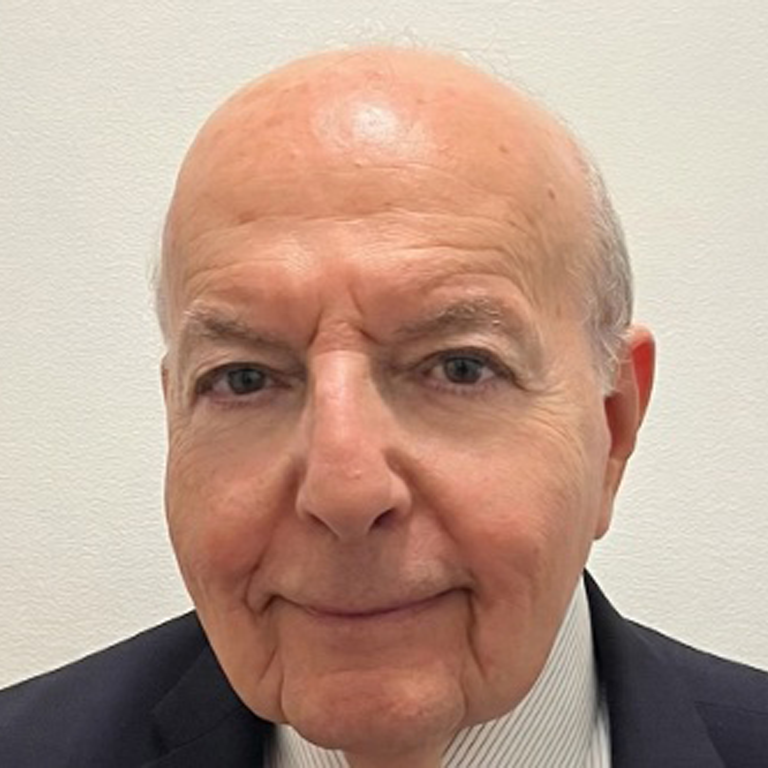
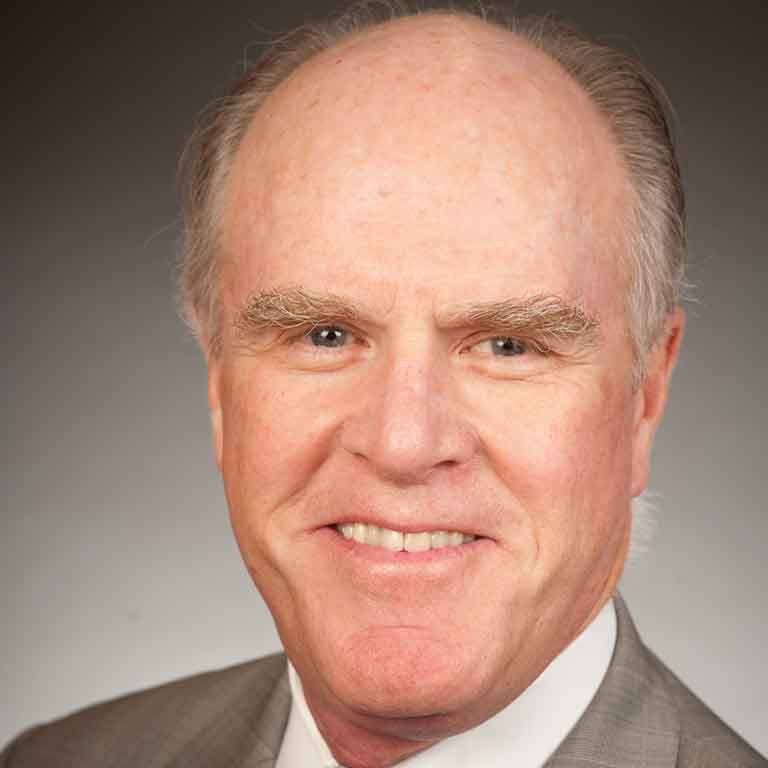
Robert D. Atkinson

Robert D. Atkinson is the founder and president of the Information Technology and Innovation Foundation (ITIF), a Washington, D.C.-based think tank focused on technology and innovation policy. An internationally recognized scholar and advisor, he brings decades of experience analyzing the intersection of technological change, economic growth, and public policy.

Before founding ITIF, Atkinson served as vice president of the Progressive Policy Institute, where he led its Technology & New Economy Project. Earlier, he held positions at the National Institute of Standards and Technology and the Congressional Office of Technology Assessment and served as executive director of the Rhode Island Economic Policy Council. He has also held numerous federal advisory roles, including chair of the National Surface Infrastructure Financing Commission and appointments to innovation and competitiveness advisory bodies across multiple administrations.

Atkinson is a prolific author and frequent congressional witness on technology and economic policy. He holds a PhD in city and regional planning from the University of North Carolina at Chapel Hill, an MS in urban and regional planning from the University of Oregon, and a BA from New College of Florida.
Gurminder Bedi

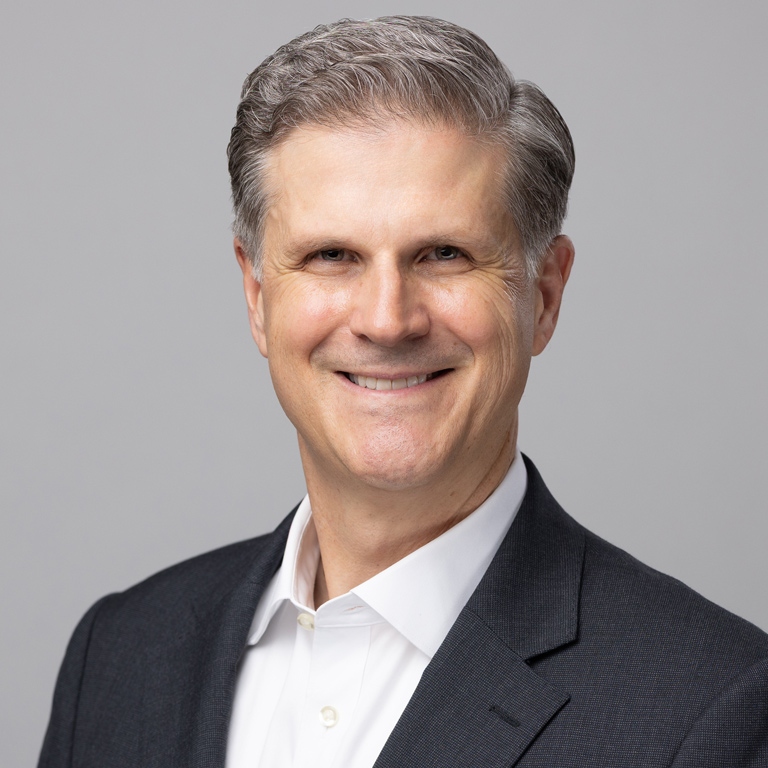
Gurminder Bedi is managing partner of Compass Acquisitions, a private equity firm, and a seasoned automotive executive with decades of global leadership experience. He previously served as vice president of North America Truck at Ford Motor Company, where he oversaw vehicle development, business strategy, and technical operations for the company’s $60 billion global truck enterprise, including the North American F-150, Econoline, Explorer, Expedition, Escape, and Ranger.

Over a 30-year career at Ford, Bedi held senior international roles, including president of Ford Argentina and Ford Brazil, and served on multiple joint venture boards. He currently serves on the boards of KEMET Corporation and Actuant Corporation and on their governance and compensation committees.

Bedi holds a BS in mechanical engineering from George Washington University and an MBA from the University of Detroit.

Keith Belton

Keith Belton is senior director of Policy Analysis and Statistics at the American Chemistry Council, where he leads research and analysis on policy issues affecting chemical manufacturers. He brings a cross-sector perspective shaped by experience in government, industry, and academia.

Belton previously served in the White House Office of Management and Budget and held a policy role at Dow. At Indiana University, he was the founding director of the Manufacturing Policy Initiative, where he established a platform for research and dialogue on U.S. manufacturing competitiveness. He continues to support the initiative’s mission through his expertise in regulatory and economic policy.

Belton holds a BS in chemistry from the University of Maryland, an MS in environmental science, and a PhD in public policy from the George Washington University.

Eileen Bradner

Eileen Bradner is a retired international trade and government affairs leader with more than 40 years of experience advancing manufacturing and trade policy. She most recently led federal government affairs for Nucor Corporation, the largest steel producer in the United States, heading the company’s Washington, D.C., office and directing its engagement with Congress and federal agencies.

Before joining Nucor, Bradner was a partner at Wiley Rein LLP in the firm’s international trade practice, where she represented U.S. manufacturers on Capitol Hill and in significant trade proceedings. She began her career in public service in the U.S. Senate, working on the Special Committee on Aging and later as a legislative assistant to Sen.  John Glenn of Ohio.

In addition to her professional work, Bradner is active in civic and nonprofit leadership, including serving as president of the Civil War Round Table of Washington, D.C., and on the board of the Ulysses S. Grant Association. She holds a BA, magna cum laude, from the University of Toledo and a JD, magna cum laude, from Georgetown University Law Center.

Hilary Cain

Hilary Cain is senior vice president of policy at the Alliance for Automotive Innovation, the leading trade association for the U.S. auto industry. She oversees policy development and leads the association’s policy team, advancing priorities across a broad portfolio spanning manufacturing, technology, and mobility.

Previously, Cain served as vice president of technology, innovation, and mobility policy, where she guided strategy on issues including automated and connected vehicles, data privacy, cybersecurity, artificial intelligence, telecommunications, and intellectual property. Before joining the alliance in 2020, she spent nearly eight years at Toyota, where she led policy development and advocacy on technology and innovation issues affecting the automotive sector.

Earlier in her career, Cain held several senior roles in the U.S. House of Representatives, including staff director of the Technology and Innovation Subcommittee and counsel on the Committee on Science, Space, and Technology, as well as legislative director and Ways and Means counsel for individual members of Congress. She is a recognized thought leader and frequent speaker on auto industry policy issues.

Cain holds a JD and an MA in public affairs from the University of Texas and a BA in political science from the University of Washington.

Paul DeLaney

Paul DeLaney is senior vice president and head of the Washington office at SK Americas, where he leads U.S. government relations and external affairs. He brings extensive experience in trade, tax, and regulatory policy, including as a partner at the Kyle House Group and as vice president for trade and international at the Business Roundtable, where he led CEO-level advocacy on USMCA implementation, tariffs, and supply chains. 

He previously served as international trade counsel to the Senate Finance Committee and as a senior attorney at FedEx Express, focusing on trade and customs matters. Earlier, he was deputy chief of staff to U.S. trade representatives Rob Portman and Susan Schwab during the George W. Bush administration. He serves on the board of the Washington International Trade Association and holds a JD from the University of Virginia and a BA in political science from Yale University.

Tom Duesterberg

Thomas J. Duesterberg is a senior fellow at Hudson Institute, where he focuses on international trade, advanced manufacturing, and global economic policy. His work examines U.S. competitiveness, trade relations with Europe and China, World Trade Organization reform, and technological competition, including emerging sectors such as 5G.

He previously served as executive director of the Aspen Institute’s Manufacturing and Society in the Twenty-First Century Program and as president and CEO of Manufacturers Alliance/MAPI. Earlier, he directed Hudson Institute’s Washington office, served as assistant secretary for international economic policy at the U.S. Department of Commerce, and held senior staff roles with Rep. Chris Cox and Sen. Dan Quayle. He also taught at Stanford University.

Duesterberg is coauthor of U.S. Manufacturing: The Engine of Growth in a Global Economy and has published more than 300 articles. In addition to serving on the MPI Board of Advisors, he is a member of the board of trustees of the American University of Rome. He holds a PhD and MA from Indiana University and a BA from Princeton University.

Jim Hecht

Jim Hecht is a partner at Skadden, Arps, Slate, Meagher & Flom, where he has spent more than 20 years focusing on complex international trade litigation and policy. He advises clients on legislative and executive branch trade initiatives and represents domestic manufacturers, including U.S. steel producers, before the Department of Commerce, the Office of the U.S. Trade Representative, the U.S. International Trade Commission, the U.S. Court of International Trade, NAFTA dispute panels, and the World Trade Organization.

Earlier in his career, Hecht served as chief counsel to Senate Majority Leader Trent Lott during the 106th Congress, where he oversaw the Senate Finance Committee’s trade portfolio. He also served as policy coordinator for the Office of the U.S. Trade Representative during the Bush-Cheney transition and advised the 1996 Dole presidential campaign on policy and platform issues. He holds a JD from Yale Law School and a BA with distinction from the University of Virginia.

Gilbert Kaplan

Gilbert B. Kaplan is a senior advisor on international trade policy and former under secretary of commerce for international trade, where he led the International Trade Administration and oversaw more than 2,000 personnel across Global Markets, Industry and Analysis, and Enforcement and Compliance. He spent decades as a partner at King & Spalding, specializing in complex trade litigation and representing U.S. companies and workers in antidumping, countervailing duty, and Section 337 cases, and advising on trade policy and negotiations. He also played a key role in filing the first successful countervailing duty case against China in 2007.

Earlier, Kaplan held senior roles at the U.S. Department of Commerce, including acting assistant secretary and deputy assistant secretary for Import Administration, where he oversaw hundreds of trade remedy cases and helped negotiate bilateral agreements. He is a cofounder of MPI and the founder of the Conference on the Renaissance of American Manufacturing. He holds a JD, cum laude, from Harvard Law School and a BA, magna cum laude, from Harvard College.

Sarah Kemp

Sarah Kemp is a global policy executive at Intel with experience spanning international trade, public policy, and corporate strategy. Before joining Intel in 2022, she served as associate vice president for global health policy and ESG strategy at Organon and as associate vice president for public policy at Merck, leading engagement across Asia-Pacific and emerging markets.

She previously served as deputy under secretary for the International Trade Administration at the U.S. Department of Commerce, overseeing a $485 million budget and more than 2,100 trade and investment professionals worldwide. She also held diplomatic posts with the U.S. Foreign Commercial Service, including minister-counselor for commercial affairs at the U.S. Embassy in Beijing, with assignments in Hanoi, Hong Kong, and Bangkok.

Kemp holds an MBA from the Chinese University of Hong Kong, an MPA from Columbia University, and a BA from Hamilton College. In addition to serving on the MPI Board of Advisors, she sits on the boards of Northern Technologies International Corporation and several policy and business organizations, including the U.S.-ASEAN Business Council and the Center for International Private Enterprise.

Dana Marshall

Dana Marshall is an international economic policy strategist with experience across the public and private sectors. He is founder and president of Transnational Strategy Group LLC, a Washington, D.C.-based consultancy established in 2012 that advises global clients on market access, political risk, and government affairs.

Before founding the firm, Marshall spent more than a decade as a senior international economic and foreign policy advisor to U.S.-based global law firms, supporting clients across major industries. Earlier, he held senior roles in the U.S. government, including advising Vice Presidents Al Gore and Dan Quayle, and positions at the U.S. Department of Commerce, the Office of the U.S. Trade Representative, the U.S. Department of State, and the U.S. Mission to the European Union, and served as a congressional fellow.

Marshall holds an MPA in energy and resource economics from Harvard University, an MBA in international business from The Ohio State University, and a BS in physics from Case Western Reserve University. He also completed the equivalent of a BS in economics through the U.S. Department of State’s Foreign Service Institute.

Pat Mulloy

Patrick Mulloy is an international trade policy expert with experience across the legislative and executive branches of the U.S. government. He has served as a foreign service officer and as an attorney at the U.S. Department of Justice, as well as in senior staff roles on the Senate Committee on Banking, Housing, and Urban Affairs, where he helped shape U.S. trade and economic policy.

Mulloy later served as assistant secretary for Market Access and Compliance in the International Trade Administration at the U.S. Department of Commerce and completed five terms on the bipartisan U.S.-China Economic and Security Review Commission. He has advised policymakers and organizations on trade and economic issues and testified before Congress. He also served as adjunct professor at Catholic University and George Mason University law schools, where he taught international trade law.

Mulloy holds a BA from King’s College, an MA from the University of Notre Dame, a JD from The George Washington University Law School, and an LLM from Harvard Law School.

Nazak Nikakhtar

Nazak Nikakhtar is an international trade and national security attorney and partner at Wiley Rein LLP, where she co-chairs the national security and Committee on Foreign Investment in the United States (CFIUS) practices. She advises clients on international trade, export controls, sanctions, supply chain risk, and World Trade Organization disputes and is widely recognized for her work on economic competition and national security policy.

From 2018 to 2021, she served as assistant secretary for Industry and Analysis in the International Trade Administration at the U.S. Department of Commerce. She also performed the duties of under secretary for Industry and Security, leading the Bureau of Industry and Security and shaping U.S. trade and national security policy, including export controls on dual-use technologies, supply chain resilience, and economic competitiveness initiatives.

Nikakhtar is a trade and industry economist, a frequent speaker on trade and national security, and a former adjunct professor at Georgetown University Law Center. She holds a JD and an MA in economics from Syracuse University, where she served as editor-in-chief of the Syracuse Journal of International Law and Commerce, and a BA from the University of California, Los Angeles.

Steve Orava

Steve Orava is chair of the international trade practice at King & Spalding LLP and manager of the firm’s Brussels office, where he advises clients on global trade, regulatory, and policy matters. He represents clients in trade investigations, disputes, and enforcement actions, with experience spanning antidumping, countervailing duty, and safeguard proceedings across major markets, including the United States, European Union (EU), China, India, and Brazil.

Orava counsels companies on market access, supply chains, trade policy, and World Trade Organization (WTO) dispute settlement, as well as emerging issues at the intersection of trade and climate policy. He has significant experience advising on carbon border adjustments and other trade-related climate measures, including the EU’s Carbon Border Adjustment Mechanism and implementation of California climate policy.

A frequent author and speaker on international trade and WTO issues, Orava is widely recognized as a leading practitioner in trade remedies and policy. He holds a JD from Georgetown University Law Center, a BS, magna cum laude, from Southern Methodist University, and completed additional studies in international economics and political economy at the London School of Economics.

Scott Paul

Scott Paul is president of the Alliance for American Manufacturing (AAM), a partnership established in 2007 between leading U.S. manufacturers and the United Steelworkers. He leads efforts to elevate manufacturing as a national policy priority through advocacy, research, and public engagement, shaping discussions on trade, competitiveness, and industrial strategy.

Before joining AAM, Paul served on the legislative staff of the AFL-CIO and spent more than a decade on Capitol Hill, including as chief foreign policy and trade advisor to House Democratic Whip David E. Bonior. He has testified before multiple congressional committees, coauthored ReMaking America, and frequently comments on manufacturing and trade issues.

Paul holds a BA in foreign service and international politics from Pennsylvania State University and an MA, with honors, in security studies from Georgetown University’s School of Foreign Service.

John Smirnow

John P. Smirnow is an international trade and clean energy expert who advises clients at the intersection of trade policy, renewable energy, and domestic manufacturing. Most recently, he served as senior vice president for supply chain and sustainability and general counsel at the Solar Energy Industries Association, where he led international trade advocacy, helped the U.S. solar industry avoid significant duty costs, and advanced domestic manufacturing policy, contributing to the Inflation Reduction Act’s solar manufacturing provisions.

Earlier, Smirnow founded the Global Solar Council and served as its first secretary-general, building it into a leading global voice for the solar industry and establishing partnerships with major international organizations. He previously served as a legal advisor to a commissioner at the U.S. International Trade Commission and as a law clerk at the U.S. Court of International Trade. He began his career in private practice advising clients on international trade matters.

A frequent commentator on trade, clean energy, and sustainability, Smirnow is widely cited in media and industry forums. He holds a BA from the University of Michigan, a JD from Cooley Law School, and an LLM in international law from Georgetown University Law Center.

Sue Smith

Sue G. Smith is executive program director of the Smart Automation Certification Alliance (SACA), where she works with industry and education partners to scale certifications in Industry 4.0 and emerging technologies. She has led national technical working groups developing credentials in areas such as the metaverse, semiconductors, and hybrid electronics, advancing workforce readiness in next-generation manufacturing.

Smith brings more than 30 years of experience at Ivy Tech Community College, where she held campus and statewide leadership roles. As vice president of the School of Advanced Manufacturing, Engineering and Applied Science, she developed a statewide model based on stackable credentials and aligned academic pathways and led efforts to modernize programs to Industry 4.0 standards, including adoption of SACA certifications and development of the Smart Manufacturing Digital Integration degree.

A nationally recognized expert in workforce and economic development, Smith specializes in advanced and smart manufacturing and has contributed to national initiatives in apprenticeship and technical education. She has served on multiple national boards, including the National Council for Workforce Education, and is a past president and board member of the American Technical Education Association. She holds an MA from Antioch University McGregor, and a BA and associate (AA) degrees from Indiana University.

Terrence Straub

Terrence Straub is a senior industry and government affairs leader with decades of experience advancing U.S. manufacturing and trade policy. Most recently, he served as senior vice president of public policy and governmental affairs at U.S. Steel, where he represented the company and the broader U.S. steel industry in shaping domestic and international policy and regulatory frameworks.

Straub has held numerous leadership roles in industry associations and government advisory committees, contributing to policy affecting the U.S. steel sector. Earlier, he served as special assistant for congressional affairs to President Jimmy Carter, managing legislative strategy, including efforts to establish the Department of Education and advance federal reorganization initiatives. He also worked in Indiana state government and was the Democratic nominee for Congress in Indiana’s 6th District.

Straub was a 2011 fellow in the Advanced Leadership Initiative at Harvard University. He holds a BS in business from Indiana University and an MA from the Johns Hopkins School of Advanced International Studies.

Bob Sussman

Bob Sussman is principal at Sussman & Associates, where he advises nonprofit and private-sector clients on environmental policy, regulatory strategy, and cross-agency coordination. During the Obama administration, he served as senior policy counsel to the administrator of the U.S. Environmental Protection Agency (EPA), acting as the principal policy advisor and helping guide agency priorities in coordination with the White House and other federal agencies. Earlier, he served as EPA deputy administrator in the Clinton administration, where he was the agency’s chief operating and regulatory policy officer.

Sussman previously was a partner at Latham & Watkins, leading the firm’s Washington, D.C., environmental practice, and practiced at Covington & Burling, a leading international law firm known for its regulatory, litigation, and public policy work. Across his career, he has advised companies and trade associations as a policy advisor, advocate, and litigator. He has also held academic and policy roles, including adjunct professor at Georgetown University Law Center, visiting lecturer at Yale Law School, and senior fellow at the Center for American Progress. He holds a BA, magna cum laude, from Yale College and a JD from Yale Law School.

W. Patrick Wilson

W. Patrick Wilson is the founding principal of Semiconductor & Innovation Group LLC, a firm launched in 2026 focused on government relations and corporate strategy at the intersection of technology and public policy. He brings more than two decades of experience spanning federal service, congressional leadership, and private-sector advocacy.

Wilson previously served as vice president of government affairs and general manager at MediaTek Inc., a leading global semiconductor company. Before that, he held a senior appointed role at the U.S. Department of Commerce, leading the Office of Business Liaison within the Office of the Secretary. His private-sector experience also includes leading government relations for Cummins Inc., Babcock & Wilcox, and the Semiconductor Industry Association, where he helped establish the association's first Washington, D.C., advocacy presence.

He began his career on Capitol Hill, serving in both the U.S. House and Senate, including roles as senior counsel to the House Small Business Committee and legislative director to Congressman Mike Pence. A veteran of Operations Iraqi Freedom and New Dawn, Wilson serves as a civil affairs officer in the U.S. Army Reserve. He holds a bachelor’s degree from the University of Denver and serves on multiple policy and academic advisory boards.